 WANLONG TIMES
Qumtosh kabi yuqori abraziv materiallarni qayta ishlashda zavodning yuqori chegaralarini saqlab qolish uchun kurashyapsizmi?? To'g'ri sanoat texnikasini tanlash ortiqcha moddiy chiqindilar va benuqson o'rtasidagi aniq burilish nuqtasi bo'lishi mumkin, yuqori hajmli ishlab chiqarish.
Raqobatbardosh tosh ishlab chiqarish sanoatida, chiqish sifati butunlay uskunangizning ishonchliligiga bog'liq. Pastki o'rnatishni tanlash qirralarning parchalanishiga olib keladi, buzilgan sarf materiallari, va qimmatga tushadigan to'xtash vaqti.
Ushbu keng qamrovli qo'llanmada, qanday qilib birlashtirilganligini bilib olasiz qumtoshlarni kesish va parlatish mashinasi ish jarayoni xom ashyoni o'zgartiradi, og'ir bloklarni premiumga aylantiring, bozorga tayyor plitalar. Asbobning asosiy parametrlarini ajratamiz, avtomatlashtirilgan ishlab chiqarish liniyalari, va biznesingizni kengaytirish uchun talab qilinadigan yuqori aniqlikdagi muhandislik standartlari.
Keling, to'g'ridan-to'g'ri suvga tushaylik.
Qumtoshlarni kesish va silliqlash mashinalari: To'liq toshni qayta ishlash yechimi
Tosh hovlisini yoki ishlab chiqarish do'konini boshqarish katta bosh og'rig'i bilan kurashishni anglatadi: xom ashyo bilan ishlov berish, tezlikni yo'qotmasdan yoki asbobingizni yo'q qilmasdan abraziv qumtosh. Agar siz past samaradorlik bilan kurashayotgan bo'lsangiz, notekis kesmalar, yoki yuqori darajada abraziv materiallar bilan ishlashda texnik xizmat ko'rsatish xarajatlarining keskin ko'tarilishi, sizga aqlliroq sozlash kerak. Biz ushbu aniq qiyinchiliklarni bartaraf etish uchun toshni qayta ishlashning avtomatlashtirilgan echimlarini ishlab chiqamiz, xom karer bloklarini yuqori qiymatga aylantirish, bozorga tayyor plitalar.
Og'ir Qumtosh Blok Kesuvchi Ishlash
Xom tuproqdan tayyor mahsulotgacha bo'lgan sayohat chiziqning boshidan boshlanadi. Og'ir yuk qumtosh bloklarini kesuvchi massivga tayanadi, mustahkamlangan portal konstruksiyalari va yuqori momentli shpindellar katta o'lchamdagi karer bloklarini ter to'kmasdan kesib o'tish uchun.
- Yuqori turg'unlikdagi Gantry yo'riqnomasi: To'g'riligini ta'minlash uchun tebranishlarni yo'q qiladi, massiv bloklar bo'ylab haqiqiy kesmalar.
- Ko'p pichoq qobiliyati: Bir vaqtning o'zida kesish imkonini beradi, kunlik hosilni sezilarli darajada oshiradi.
- Nozik gidravlik ko'tarish: Bir tekis vertikal besleme tezligini ta'minlaydi, pichoqlaringizni zich qumtoshda erta eskirishdan himoya qilish.
Qumtosh uchun avtomatik ko'prik arra nima uchun muhim?
Bloklaringiz boshqariladigan plitalarga tushgandan so'ng, bu qumtosh uchun avtomatik ko'prik arra ustaxonangizning mutlaq asosi bo'lib oladi. Siz bugungi kunda qo'llanmaga tayanib, raqobatbardosh ishlab chiqarish biznesini yurita olmaysiz, sekin harakatlanuvchi kesish usullari.
- CNC nozik dasturlash: O'lchamlaringizni kiriting, va mashina benuqson tekis ishlaydi, miter, yoki burchak avtomatik ravishda kesiladi.
- Aylanadigan ish stollari: Og'ir qumtosh plitalarini qo'lda ko'tarmasdan yoki joyini o'zgartirmasdan kesilgan burchaklarni o'zgartirishingiz uchun 360 daraja joylashishni yoqadi..
- Doimiy ishlab chiqarish mahsuldorligi: Inson xatosini kamaytiradi, materialni tejaydi, va yig'ish liniyasini tugatish bosqichlariga muammosiz harakatlanishini ta'minlaydi.
To'g'ri olmosli qumtoshni kesish pichog'ini tanlash
Qumtosh juda abrazivdir. Agar siz uni noto'g'ri pichoq bilan bog'lasangiz, siz matritsani buzasiz, olmoslarni xira, va byudjetingizni yoqib yuboring. To'g'ri tanlash olmosli qumtosh kesish pichog'i pichoq rishtasini qumli bilan moslashtirish uchun tushadi, toshning qattiq tabiati.
Segmentli olmosli pichoq va doimiy halqa
Og'ir qumtoshlarni qayta ishlash uchun, a segmentli olmosli pichoq sanoat standarti hisoblanadi. Segmentlar orasidagi gulletlar pichoqni sovutadi va atala tezda yuviladi. Uzluksiz jant pichog'i qalin qumtosh plitalarini kesishda qizib ketadi va darhol sirlanadi.
| Pichoq turi | Eng yaxshi uchun ishlatiladi | Pros | Kamchiliklari |
|---|---|---|---|
| Segmentli olmosli pichoq | Chuqur kesmalar, blokni kesish, tez ishlab chiqarish | Salqin operatsiya, tez chiplarni olib tashlash, abraziv toshda uzoq umr | Qo'pol qirralar |
| Uzluksiz Rim | Yupqa plitkalarni kesish, batafsil tugatish ishlari | Toza, chipsiz qirralar | Tez qizib ketadi, sekin kesish tezligi |
Operatsion parametrlarni o'rnatish: Pichoqning aylanish tezligi va besleme tezligi
Siz qumtoshni granit yoki marmar bilan bir xil tezlikda ishlata olmaysiz. Chunki qumtosh sizning uskunangizdagi zımpara kabi ishlaydi, sizga yumshoqroq bog'langan olmos segmenti kerak, past aylanish tezligi, va barqaror, pichoqni o'z-o'zidan o'tkirlashiga imkon berish uchun ataylab oziqlantirish tezligi.
- Pichoqning aylanish tezligi: O'rtacha darajada saqlang. Yuqori tezlik haddan tashqari ishqalanish hosil qiladi, rishtani eritib, olmos oynalanishiga olib keladi.
- Oziqlantirish tezligi: Doimiy bosimni saqlang. Juda tez surish yadroni burishtiradi; juda sekin oziqlantirish pichoqning yuqoriga ko'tarilishiga va silliqlashishiga olib keladi.
- Oltin qoida: O'zingizning motoringizni tinglang qumtosh uchun avtomatik ko'prik arra. Barqaror, past g'o'ng'irlash sizning parametrlaringiz mukammal terilganligini anglatadi.
Nima uchun ho'l tosh arra moylash tizimlari muzokaralar olib bo'lmaydi
Amerika Qo'shma Shtatlarida, Nafas olish mumkin bo'lgan kristalli silika bo'yicha OSHA qo'llanilishi nihoyatda qattiq. Qumtosh kremniy bilan o'ralgan, yuqori oqim hosil qilish ho'l tosh arra moylash tizimlari muvofiqlik va xavfsizlik uchun mutlaq talab.
OSHA muvofiqligi haqida eslatma: Quruq kesish qumtosh variant emas. Uzluksiz suv yetkazib berish xavfli changni manbada bostirib, pichoqning ishlash muddatini ikki baravarga uzaytiradi 40%.
- Changni bostirish: Suv toshqini sovutish tuzoqlari tosh kesishda silika changini yumshatish to'g'ri kesish chizig'ida, do'koningiz havosini toza saqlash.
- Segmentning uzoq umr ko'rish muddati: Suv juda abraziv qumtosh shlamini yuvib tashlaydi, aks holda pichoqning po'lat yadrosini buzadi..
- Kesish sifati: To'g'ri moylash termal zarbani oldini oladi, to'g'riligini ta'minlash, har bir plita bo'ylab haqiqiy kesmalar.
Ko'p boshli tosh jilo chizig'i bilan benuqson tugatishga erishish
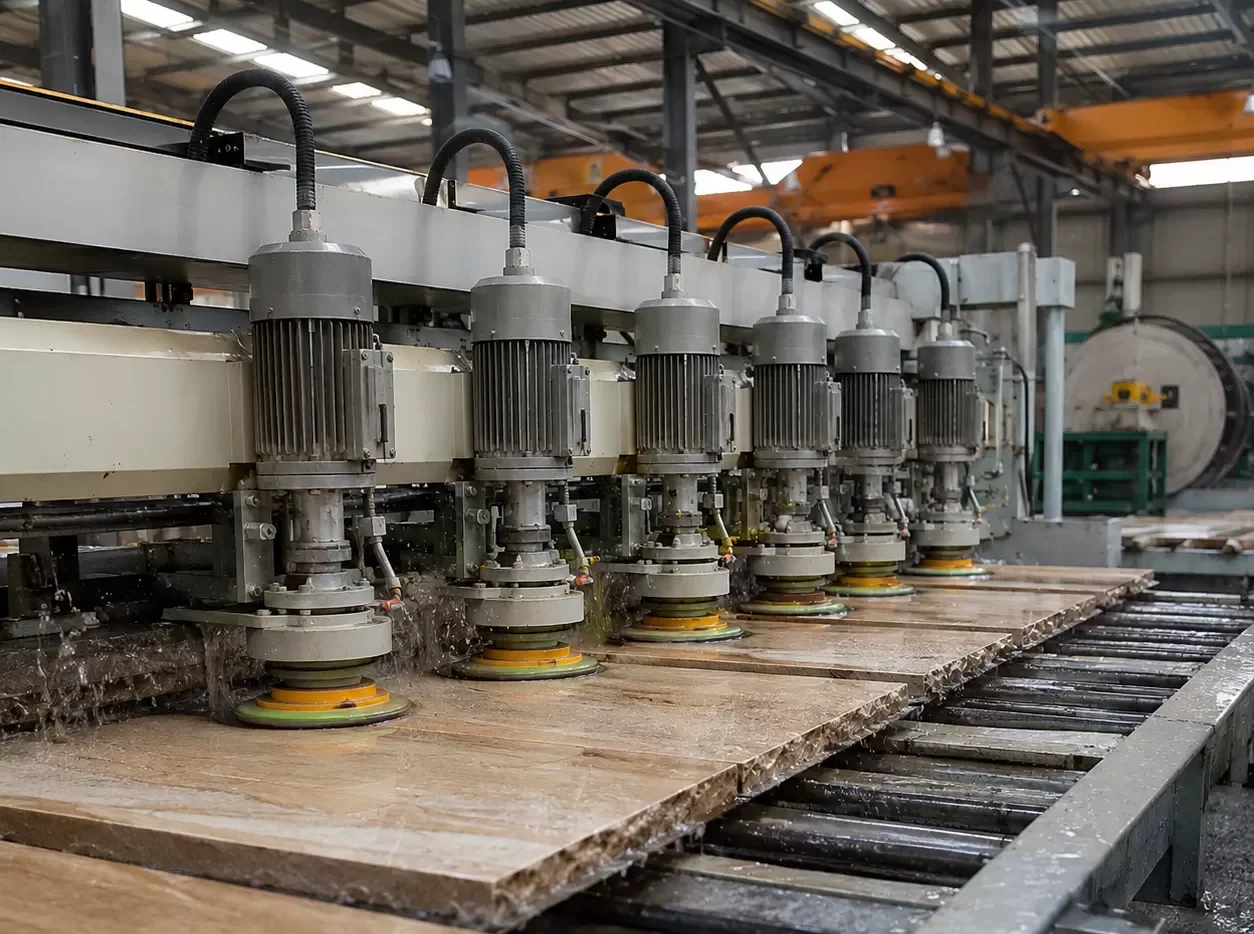
Barqarorlikni olish, qumtoshning yuqori sifatli qoplamasi uning abrazivligi tufayli qiyin bo'lishi mumkin, donli tabiat. Aynan shu erda avtomatlashtirilgan ko'p boshli toshni parlatish liniyasi do'koningiz uchun yakuniy o'yin o'zgartiruvchiga aylanadi. Qo'l mehnatiga tayanish va tekis bo'lmagan sirtlarni xavf ostiga qo'yish o'rniga, bu uzluksiz tizim plitalarni konveyer tasmasi bo'ylab bir qator og'ir polishing boshlari ostida siljitadi, har safar mukammal tugatish.
Avtomatlashtirilgan uzluksiz ish jarayoni
Uzluksiz ko'p boshli chiziqning go'zalligi uning samaradorligidir. Plitalar mashinaga xom va notekis kiradi, va chiqish to'liq tugadi va jo'natishga tayyor.
- Qadam 1: Kalibrlash: Boshlang'ich boshlar plitani mukammal bir xil qalinlikda maydalaydi.
- Qadam 2: Chizilganlarni olib tashlash: O'rta boshlar ko'prik arra qoldirgan izlarni o'chirish uchun agressiv maydalagichlardan foydalanadi.
- Qadam 3: Polsha yoki hone: Yakuniy boshlar talab qilinadigan aniq sirt tuzilishini qo'llaydi, silliq matdan chuqur porlashgacha.
Gritning rivojlanishi uchun sanoat toshini parlatish prokladkalarini tanlash
Qumtosh zaif abraziv moddalarni tezda yutadi. Kvadrat fut narxini past saqlash uchun, sizga huquq kerak sanoat toshni silliqlash prokladkalari va qattiq grit progressiya.
| Bosqich | Grit diapazoni | Asbob turi | Maqsad |
|---|---|---|---|
| Kalibrlash | 30# - 120# | Olmosli silliqlash g'ildiraklari | Plitani tekislaydi va baland joylarni olib tashlaydi |
| Hurmatli | 200# - 800# | Qatronlar bilan bog'langan prokladkalar | To'qimalarni tekislaydi va chizishlarni yo'q qiladi |
| Tugatish | 1500#+ yoki Buff | 5-Qo'shimcha / Lyuks buferlar | Sirtni muhrlaydi va tabiiy rangni chiqaradi |
Maslahat uchun: Yuqori abraziv qumtosh uchun, Biz kremniy karbid yoki ixtisoslashtirilgan qattiq bog'langan olmos matritsali prokladkalarni tavsiya qilamiz, bu erta eskirishning oldini olish va shishani oldini olish uchun..
Ilg'or tabiiy tosh sirtini qayta ishlash
AQSh bozori ko'p qirralilikni talab qiladi. Ba'zi arxitektura loyihalari an'anaviy silliq tugatishni talab qiladi, ko'plab ochiq hovli va tijorat xususiyatlari maxsus sirpanishga chidamli to'qimalarni talab qiladi. Bizning mashinamiz to'liq spektrni boshqaradi tabiiy tosh yuzasini qayta ishlash:
- Kalibrlash: Har bir plitaning aniq me'moriy qalinlik xususiyatlariga mos kelishini ta'minlaydi.
- Hurmatli: Silliq hosil qiladi, mat, zamonaviy Amerika o'choqlari va ichki taxta uchun juda mashhur bo'lgan aks ettirmaydigan qoplama.
- Teksturalash: Bosh bosimini sozlash va maxsus cho'tka qo'shimchalari yordamida, chiziq osongina cho'tka ishlab chiqarishi mumkin, antiqa, yoki toshning qiymatini oshiradigan charm qoplamalar.
To'liq toshni qayta ishlash zavodi uskunalari sxemasi qanday ko'rinishga ega?
Yuqori samarali ustaxonani tashkil etish aqllilikni talab qiladi, uzluksiz ish jarayoni. To'liq toshni qayta ishlash zavodi uskunalari layout xom karer bloklarini qimmat to'siqlarsiz bozorga tayyor plitalarga aylantiradi. Ishlab chiqarishning har bir bosqichini birlashtirish orqali, siz materialning silliq harakatlanishini ta'minlaysiz va behuda mehnatni yo'qotasiz.
Integratsiyalashgan ishlab chiqarish liniyasini qurish
Yuqori ishlab chiqarish zavodi tartibi ketma-ketlikka tayanadi, avtomatlashtirilgan oqim. Biz ishlab chiqarish liniyalarimizni boshidan oxirigacha og'ir yuklarni ko'tarish uchun loyihalashtiramiz:
- Birlamchi parchalanish: The qumtosh bloklarini kesuvchi xom oladi, massiv karer bloklari va ularni ishlov beriladigan plitalarga bo'linadi.
- Aniq o'lcham: Plitalar to'g'ridan-to'g'ri joyga o'tadi qumtosh uchun avtomatik ko'prik arra aniq o'lchamli kesish uchun.
- Tugatish & Tafsilotlar: Bo'laklar sayohat qiladi ko'p boshli toshni parlatish liniyasi yetib borishdan oldin chetini profillash va qirqish mashinasi yakuniy arxitektura detallari uchun.
[Xom bloklar] ➔ [Qumtosh bloklarini kesuvchi] ➔ [Avtomatik ko'prik arra] ➔ [Ko'p boshli polishing] ➔ [Chetlarni profillash] ➔ [ Mahsulot]
Factory ROI va ish vaqtini maksimal darajada oshirish
Investitsiya qilish yuqori aniqlikdagi toshni qayta ishlash echimlari to'g'ridan-to'g'ri daromadingizga ta'sir qiladi. AQSh bozorida, bu erda mehnat xarajatlari yuqori va loyiha muddatlari qattiq, qo'lda ishlov berishni minimallashtirish - hamma narsa.
Bizning WANLONG tosh mashinalari echimlari uzluksiz yuqori yuklanish vaqtini maksimal darajada oshirish uchun maxsus ishlab chiqilgan. Og'ir yuk komponentlari va intuitiv boshqaruvlar bilan yaratilgan, bu mashinalar smenadan keyin taxminiy ravishda ishlaydi. Ushbu chidamlilik sizning kundalik ishlab chiqarish maqsadlaringizga erishishingizni ta'minlaydi, kutilmagan texnik xarajatlarni kamaytirish, va investitsiyalaringizdan tez daromad oling.
Qumtoshlarni kesish mashinasining narxi va mulkning umumiy qiymatini nima boshqaradi?
Og'ir texnikaga sarmoya kiritish nafaqat stikerning dastlabki narxiga bog'liq; bu nima uchun to'layotganingizni va bu sarmoyaning vaqt o'tishi bilan qanday ishlashini tushunish haqida. Baholashda a qumtosh kesish mashinasi narx, boshlang'ich xarajat asosiy muhandislik xususiyatlari va texnologik integratsiya darajasi bilan bog'liq.
Dvigatel ot kuchi va CNC avtomatizatsiyasini baholash
ning narxi CNC tosh kesish mashinalari to'g'ridan-to'g'ri katta hajmli ishlov berish qobiliyatiga ega, uzluksiz ishlab chiqarish.
- Dvigatel ot kuchi (HP): Yuqori ot kuchiga ega bo'lgan asosiy vosita mashinaga katta dvigatelni boshqarishga imkon beradi olmosli qumtosh kesish pichog'i botqoqlangan aylanish vaqtlari holda zich material orqali. Ko'tarilgan HP og'irroq ichki qismlarni talab qiladi, bu mashinaning asosiy narxini oshiradi, lekin vosita muddatidan oldin yonib ketishining oldini oladi.
- Avtomatlashtirish darajalari: Oddiy qo'lda yoki yarim avtomatik arra oldindan kamroq turadi, lekin doimiy operator aralashuvini talab qiladi. To'liq CNC avtomatizatsiyasiga yoki dasturlashtiriladiganga yangilash qumtosh uchun avtomatik ko'prik arra aniq servo motorlarni taqdim etadi, ilg'or dasturiy ta'minot, va mehnat xarajatlarini kamaytiradigan va material unumdorligini oshiradigan avtomatlashtirilgan egilish boshlari.
Mashinaning dastlabki narxini uzoq muddatli texnik xizmat ko'rsatish xarajatlari bilan muvozanatlash
Arzon mashina ko'pincha qimmat xatoga aylanadi. Haqiqiy egalik narxini topish uchun, sotib olish narxini uzoq muddatli operatsion xarajatlar bilan muvozanatlashingiz kerak.
| Xarajat omili | Arzon narxlardagi mashinalar | Yuqori aniqlikdagi toshni qayta ishlash echimlari |
|---|---|---|
| Dastlabki investitsiyalar | Past | Oldindan yuqori narx |
| Komponentning ishlash muddati | Qisqaroq; shpindel va podshipniklarni tez-tez almashtirish | Chidamli; kabi premium tuzilmalar WANLONG tosh mashinalari echimlari |
| Sarflanadigan kiyim | Yuqori; zaif barqarorlik xarobalari sanoat toshni silliqlash prokladkalari va pichoqlar | Past; qattiq ramkalar a umrini uzaytiradi segmentli olmos pichoq va uzluksiz halqa |
| To'xtab qolish xavfi | Yuqori; tez-tez rejadan tashqari texnik xizmat ko'rsatish | Minimal; uzluksiz ishlash uchun ishlab chiqilgan, yuqori yuklanish vaqti |
Yaxshi qurilgan qumtosh bloklarini kesuvchi yoki chetini profillash va qirqish mashinasi og'ir quyma temir konstruktsiyasi va muhrlangan xususiyatlariga ega, yog 'bilan cho'milgan hidoyat relslari. Ushbu yuqori sifatli qurilish sifati harakatlanuvchi qismlarni abraziv qumtosh atalasidan himoya qiladi, zaxira qismlarga minglab dollar tejash va yo'lda ishlab chiqarish soatlarini yo'qotish.
Qumtoshlarni qayta ishlash mashinalari haqida tez-tez so'raladigan savollar
Abrasiv qumtoshlarni kesishda olmos oynalarini qanday oldini olish mumkin?
Qumtosh juda abrazivdir, Agar matritsa juda qattiq bo'lsa, bu pichoqning metall birikmasini tezda yo'q qilishi yoki olmos oynalanishiga olib kelishi mumkin.. Sizning olmosli qumtosh kesish pichog'i o'tkir va uning sirlanishini oldini oladi, ushbu bosqichlarni bajaring:
- Yumshoq bog'lanish matritsasidan foydalaning: Pichoqlaringiz abraziv materiallar uchun maxsus mo'ljallangan yumshoq metall bog'ichdan foydalanganligiga ishonch hosil qiling, yangi olmoslarni tabiiy ravishda ochishga imkon beradi.
- Vaqtinchalik kiyinish davrlarini boshqaring: Agar oynalar paydo bo'lsa, yuqori abrazivni kesib tashlang, sirlangan metallni olib tashlash va olmos qumini qayta ochish uchun asfalt blok yoki o'tga chidamli g'isht kabi strukturaviy bo'lmagan material.
- Oziqlantirish tezligini optimallashtirish: Mashinani juda sekin ishlatishdan saqlaning. Past bosim olmoslarni kesish o'rniga ishqalanishiga olib keladi, oynalanishni tezlashtirish.
Toshni kesishda silika changini yumshatishning eng yaxshi usuli qanday??
Kremniyli chang bilan ishlov berish Qo'shma Shtatlardagi OSHA standartlariga javob berish va ekipajingizni himoya qilish uchun juda muhimdir.
- Yuqori hajmli nam tosh arra moylash tizimlari: Kesish nuqtasida uzluksiz suv oqimi changni havoga tushishidan oldin bostiradi.
- Integratsiyalashgan suvni qayta ishlash uchun atala tanklari: Oqim oqimini boshqarish uchun yopiq pastadir filtrlash tizimidan foydalaning, Sizning do'koningiz changga aylanishi mumkin bo'lgan quritilgan silika loydan toza bo'lishini ta'minlash.
- Maxsus zonani ventilyatsiya qilish: Ho'l kesishingizni yuqori tezlikda harakatlanadigan joylarga yaqin sanoat changyutgichlar bilan bog'lang ko'p boshli toshni parlatish liniyasi yoki har qanday cho'zilgan tumanni tutish uchun chekka profillash stantsiyalari.
Tijoriy qumtosh kesish mashinasining narxi xususiyatlariga qarab o'zgaradi?
The qumtosh kesish mashinasi narxi ko'p jihatdan avtomatlashtirish darajasiga bog'liq, motor ot kuchi, va quvvat:
| Mashina turi | Oddiy dastur | Narx omillari |
|---|---|---|
| Og'ir Qumtosh bloklarini kesuvchi | Xom karer bloklarini kvadratlashtirish | Dvigatel ot kuchi, pichoq sig'imi |
| Qumtosh uchun avtomatik ko'prik arra | Plitalarni aniq kesish & uydirma | CNC boshqaruv integratsiyasi, egiladigan stol xususiyatlari |
| Ko'p boshli tosh jilo liniyasi | Uzluksiz yuqori hajmli pardozlash | Polishing boshlari soni, konveyer kengligi |
Kuchli investitsiya CNC tosh kesish mashinalari dastlabki xarajatlaringizni oshiradi, lekin uzoq muddatli mehnat xarajatlari va moddiy chiqindilarni keskin kamaytiradi.